
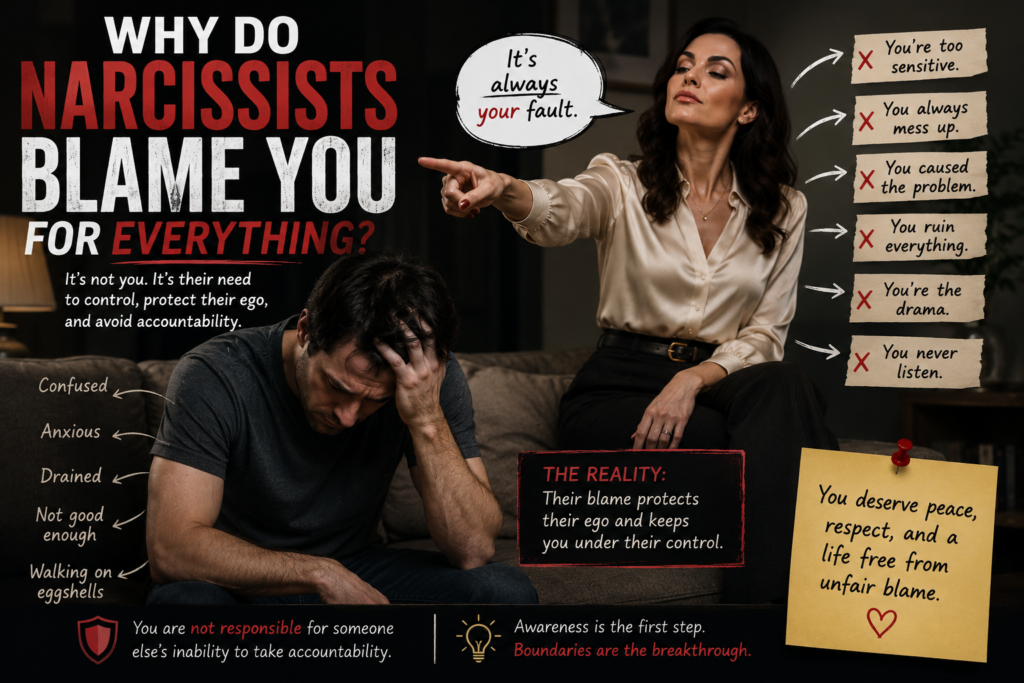
One of the most confusing parts of dealing with a narcissist is realizing that somehow, no matter what happens, the blame always lands on you. If they’re angry, it’s your fault. If they fail, you “caused stress.” If they hurt your feelings, you’re “too sensitive.” Over time, this constant blame-shifting can leave people emotionally exhausted and questioning their own reality.
Narcissists often blame others because protecting their image is more important to them than accountability. Deep down, many narcissists struggle with insecurity, even if they appear confident on the surface. Admitting fault threatens the version of themselves they want the world to see. Instead of reflecting inward, they redirect responsibility outward like a spotlight they refuse to stand in.
This behavior is closely tied to something psychologists call “projection.” Projection happens when a person takes qualities or emotions they dislike in themselves and places them onto someone else. For example, a narcissist who lies may accuse you of being dishonest. Someone who manipulates others may constantly call you manipulative. The accusations often reveal more about them than about you.
Another reason narcissists blame others is control. If they can convince you that everything is your fault, they maintain power in the relationship. You become focused on defending yourself instead of recognizing the unhealthy behavior happening around you. Over time, this creates a cycle where the narcissist avoids accountability while the other person becomes emotionally drained trying to “fix” problems they didn’t create.
Think of it like a broken shopping cart with one wheel stuck sideways. Instead of repairing the wheel, the narcissist keeps blaming the person pushing the cart. No matter how carefully you steer, the cart keeps crashing into things because the real issue was never addressed. The blame becomes a distraction from the actual problem.
Ironically, this pattern can even be compared to businesses that refuse to adapt. Some companies spend all their time blaming customers, competitors, or the economy instead of improving their systems. Successful businesses usually grow because they’re willing to adjust, improve, and take responsibility when something isn’t working. That’s one reason platforms like Shopify became so popular with entrepreneurs. Instead of focusing on excuses, they give people tools to build something better and move forward. Healthy growth—whether in business or relationships—requires accountability.
The danger of narcissistic blame is that it slowly changes how people see themselves. Victims may begin apologizing constantly, walking on eggshells, or doubting their own memory and judgment. In severe cases, this can develop into anxiety, low self-esteem, and emotional burnout.
Recognizing the pattern is often the first step toward healing. Healthy relationships involve communication, responsibility, and mutual respect. Everyone makes mistakes, but emotionally mature people can admit when they are wrong without turning every disagreement into a courtroom trial.
At the end of the day, narcissists blame others because accountability feels threatening to them. But another person’s refusal to take responsibility does not make you responsible for everything. Understanding that difference can help people regain confidence, set healthier boundaries, and stop carrying emotional weight that was never theirs to begin with.